

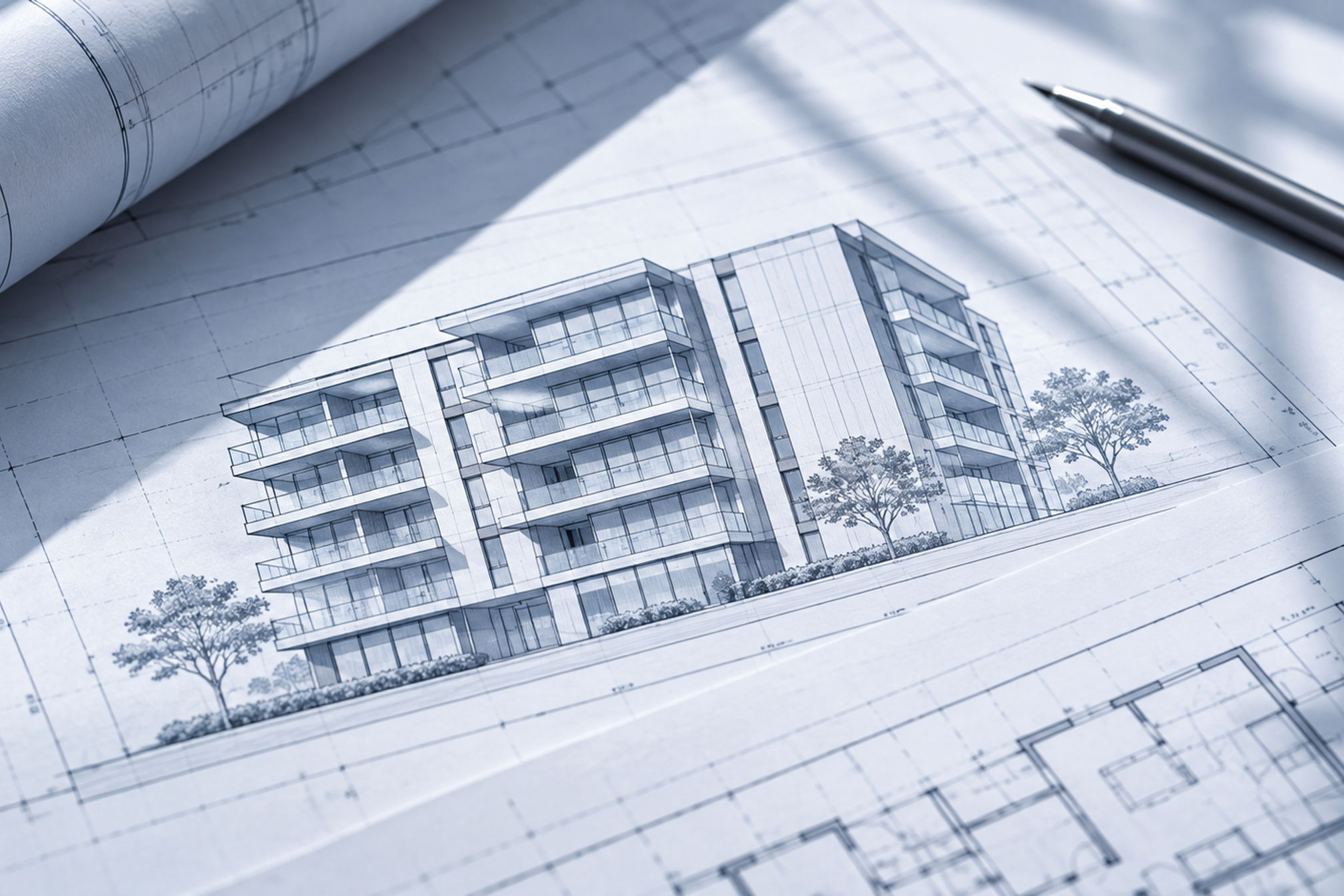
Before paying an off-plan deposit in Kenya, establish what the seller is obliged to deliver, whether it has authority to do so, and what protects your money if delivery fails. A reservation form deserves scrutiny even when the payment is described as small or temporary.
Buying off-plan means committing before the property is complete. You cannot inspect the finished home, so the decision depends on evidence about the land, the proposed building and the agreement. An attractive payment plan does not resolve those questions.
The developer’s brand, the landowner and the legal seller may be different entities. Your own Kenyan conveyancing advocate should establish how they are connected and what authorises the seller to contract with you. Our guide to checking a property developer covers the wider identity and delivery-history investigation.
A fresh official land search helps identify registered ownership and charges, cautions or restrictions. Where the land secures a loan, the purchase needs a clear explanation of any lender consent and the arrangements for releasing your unit from the security.
A parent land title does not establish that your apartment has a separate registered title. For a sectional purchase, the Sectional Properties Act provides for unit registration following registration of a sectional plan. Establish what exists now, what must happen before ownership can be registered in your name, and who must complete those steps.
Section 43 of Kenya’s Sectional Properties Act sets out documents developers must provide before selling or agreeing to sell a unit or proposed unit, where the Act applies. These include the purchase agreement, relevant title documents, sectional or proposed sectional plans, and information about charges or proposed charges. Your advocate should establish the full documents and requirements applicable to your purchase.
For construction, the NCA’s registration guidance identifies approved drawings, county planning permission, licensed professionals and other applicable approvals. Environmental licensing is a separate requirement to investigate. Match records to the actual parcel, building and phase, including amendments and conditions. A permit for an earlier phase is not an explanation of what authorises the next one.
Approvals address particular regulatory requirements. They do not promise that the developer will finish, deliver the advertised specification or return your deposit.
Dated photographs and walkthroughs can show change over time. They cannot establish everything about workmanship, concealed work or the money needed to finish. An independent construction professional can assess the visible stage and remaining work; a quantity surveyor can examine the cost assumptions within an agreed assignment.
Completed projects provide useful evidence of previous delivery. They do not establish this project’s funding or future performance. Keep developer updates distinct from observations independently checked on site, and identify what has not been inspected.
The contract should identify the unit, floor area, finishes and included amenities, with relevant plans and specifications attached. It should explain permitted substitutions and material changes. If the pool, access road or water connection matters to your decision, establish when it must be delivered and what happens if it is not.
An advertised completion target needs to be compared with the contract’s actual obligation. Define what counts as completion, who certifies it, when handover occurs and which documents must accompany it. Certification should not replace your own inspection for defects.
A long-stop date is intended to put an outer limit on delay, but its value depends on the consequences attached to it. Have your advocate explain permitted extensions, notice requirements and any termination or refund provisions. A force-majeure clause, addressing specified disruptive events, also needs scrutiny: which events qualify, and what must the developer demonstrate?
These protections need to be negotiated and understood in the actual agreement. A missed marketing date does not, by itself, establish an automatic refund or compensation entitlement.
Before transferring anything, establish the recipient, what the payment secures, whether it counts towards the price, and the conditions for returning it. For instalments, distinguish calendar deadlines from verified construction milestones. Agree who confirms a milestone and what evidence supports the next release.
“Escrow” needs an explanation: who controls the account, when funds can leave it, and what happens during a dispute or project failure. Money already released for construction may no longer be available for a refund. Any guarantee needs an identified provider, beneficiary, amount, expiry and enforceable claim conditions.
A bank financing the developer is not automatically protecting you. In the 2019 Willow Park ruling, buyers were unable to stop the lender’s proposed sale through interim injunctions. Their purchase agreements did not, on the facts before the court, bind the bank. The decision illustrates why buyers should investigate lender rights rather than assume their deposits or contracts take priority.
Before paying, obtain a written explanation of your position if construction stops: the remedy, the party responsible, and the funds or security available to meet it. A contractual claim and a recoverable payment are different things. For the broader transaction, see our guide to contracts, payments and completion.
This article provides general information about buying property in Kenya. Laws, procedures, and requirements can change, and individual transactions differ. Before signing documents or making payments, consult a qualified Kenyan conveyancing advocate. Seek independent tax advice where appropriate.
Your next step
You’ve done the research. Now discover property developments in Kenya and see how Maraboard helps you evaluate them with confidence.