

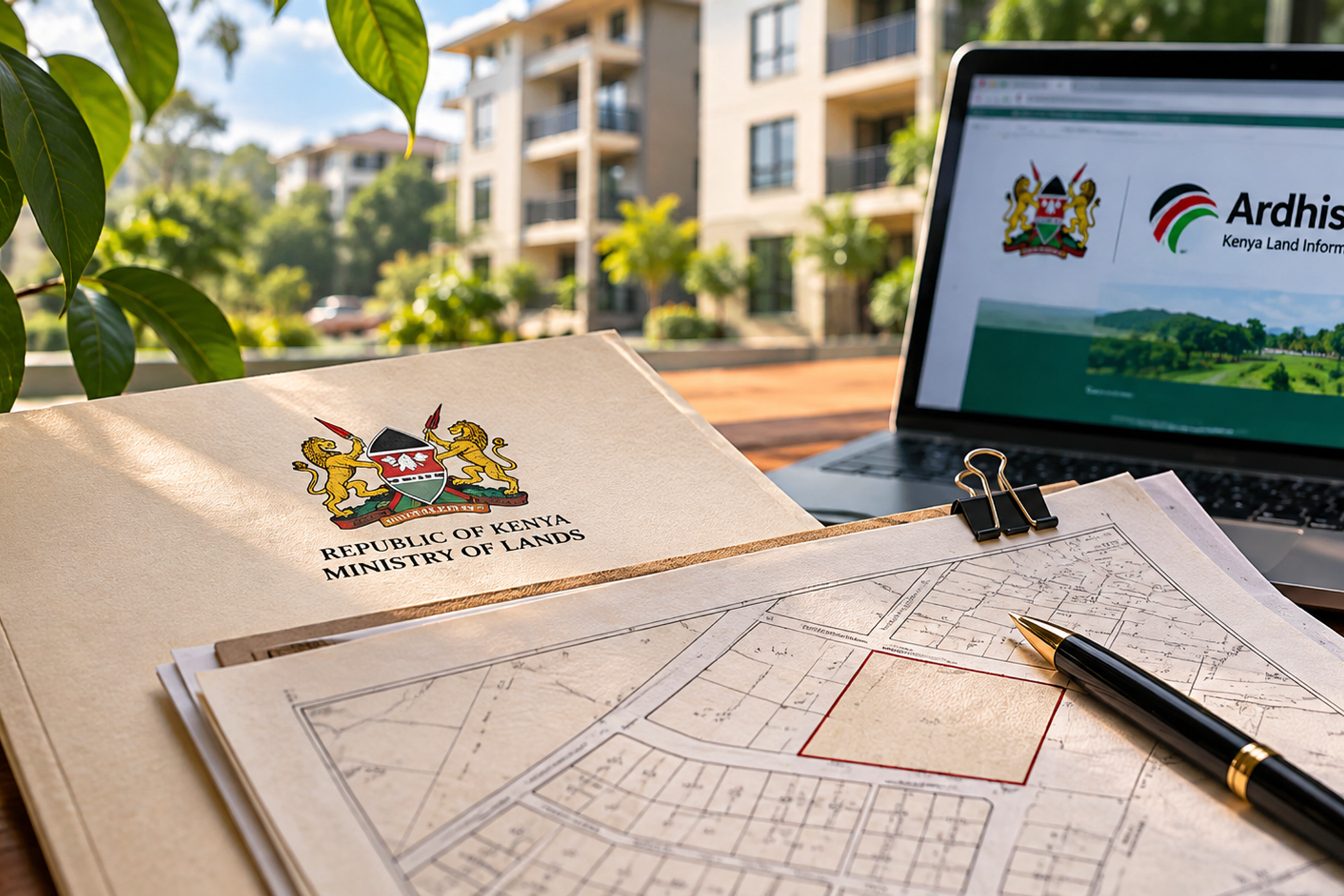
To check a Kenyan property title, obtain a current official search for the exact parcel or registered unit, then compare it with the seller’s documents. The result shows what is registered. It does not, by itself, establish that the person speaking to you can sell, that the land shown to you is the same parcel, or that a development will be delivered.
For a buyer abroad, the useful question is what the search establishes about this purchase and what still needs checking before you send money.
Ask for a legible title or lease document and the full land reference or parcel number. An estate name, apartment number in a brochure or location pin is not enough to identify the registry record.
Kenya’s land records include titles issued under older registration laws, now being brought into the Land Registration Act framework. An older L.R. number and a newer block-and-parcel number can refer to the same property following conversion. Ask the registry to confirm the connection using the relevant conversion records. Do not guess that two similar numbers are interchangeable.
If the seller supplies a search, check its date and parcel number. Arrange a fresh search independently rather than relying only on the copy selected for you.
Ardhisasa is the government’s online land-services platform. Coverage depends on the registration section and records involved, not simply the county name. The Ministry’s July 2026 Mombasa notice, for example, moved additional blocks exclusively onto the platform. It did not announce that every Kenyan property was searchable online.
For a property on Ardhisasa, register or sign in and use its official search service. Follow the current application and payment requirements for that parcel, including the purpose and scope requested. Keep the application reference and obtain the completed official certificate.
The government-hosted search user guide describes a proprietor-authorization step. Where that step applies, the registered owner must respond through the platform. This is an older guide, so confirm current requirements, particularly when coordinating from abroad. Ask the registry or your advocate about a stalled request. A pending application is not a search result.
Where the property is not handled through Ardhisasa, ask the responsible land registry which application route applies. Do not assume a manual alternative remains available for blocks moved exclusively online. The general regulations prescribe an application in Form LRA 84 and a certificate in Form LRA 85, with provision for electronic searches.
The Ministry service page lists a completed application, ID and PIN certificate among its requirements. It and the registration fee schedule list KES 1,000 for an official search, as checked on 12 November 2026. Confirm the current requirements and invoice, separate any professional charges, and allow for processing delays.
If you cannot meet the portal’s registration requirements from abroad, ask its support team or a Kenyan conveyancing advocate about the appropriate route. Keep your password and login codes private.
Compare the property reference and description with the title copy, proposed contract and plans. For a leasehold purchase, establish the lease term and what remains. Have unexplained differences in area, reference or names investigated rather than treating them as harmless typos.
Next, identify the registered proprietor, meaning the person or entity recorded as owner. Compare that identity with the contractual seller. A developer, landowner and marketing agent may be different parties. That difference needs documentary explanation, including the seller’s authority and any representative’s authority to sign. Our developer-check guide covers those relationships in more detail.
Read any registered interests or limits on dealings with your advocate:
These entries are not automatic evidence of wrongdoing. For your purchase, ask whether a transfer can be registered, what conditions apply and what must first be resolved. Your advocate should explain any required consent, release or removal, who must arrange it and when. “We’ll remove it later” is not evidence that this has happened.
A current-status search reports the entries that remain in effect. It is not automatically a full ownership history. The Electronic Transactions Regulations distinguish current-status and historical searches. Where an earlier transfer needs explaining, ask about the history and supporting registered documents.
An apparently clear register also does not rule out every right affecting the property. Section 28 of the Land Registration Act recognizes interests that can apply without appearing on it, including customary trusts and certain rights of way. Section 26 also permits challenges to title on specified grounds. A search is valuable evidence, not a guarantee against every ownership dispute.
Physical checks answer another question. The Ministry provides a separate survey-search service for survey records and plans. A surveyor can investigate how those records connect to the actual site and boundaries. A title search does not locate beacons or inspect occupation, access, buildings or promised infrastructure.
Nor does it establish that development approvals are in place, construction matches the specification or the seller can fulfil the contract. Those need their own records and checks.
For a plot undergoing subdivision, establish whether it already has its own register or is still part of a parent parcel. Ask for the approved subdivision and survey records linking the offered plot to that land. A proposed plot number on a sales layout should not be mistaken for completed registration.
The same distinction matters for an apartment awaiting its own ownership documents. Searching the parent title helps investigate the underlying land, but does not establish that an individual unit title already exists. Our apartment-title guide explains the possible arrangements.
“Titles are being processed” needs a specific answer: what is pending, who must complete it, and what does your agreement require if it is delayed or cannot be delivered?
If a record cannot be found, a register is unavailable or documents disagree, keep the issue unresolved until the registry and relevant professionals establish why. Missing information is neither proof of fraud nor evidence that the property is clear.
Before authorizing payment, ask your advocate for a short written account connecting the registered property, owner, seller’s authority and unresolved entries. Pair it with the necessary site and survey checks. Agree when records need refreshing as the transaction progresses. The result you need is an explanation of what you can buy and what remains uncertain, not simply a certificate to file away.
This article provides general information about buying property in Kenya. Laws, procedures, and requirements can change, and individual transactions differ. Before signing documents or making payments, consult a qualified Kenyan conveyancing advocate. Seek independent tax advice where appropriate.
Your next step
You’ve done the research. Now discover property developments in Kenya and see how Maraboard helps you evaluate them with confidence.